2025 Congress in Perth
As the official WJEC website is undergoing a major design update, you will be directed to the 2025 World Journalism and Education Congress website. Please use the following link: https://www.wjec2025.com
As the official WJEC website is undergoing a major design update, you will be directed to the 2025 World Journalism and Education Congress website. Please use the following link: https://www.wjec2025.com
Huge congratulations to Margaret Hughes, who has been elected as the new Chair of the World Journalism Education Council! Margaret served as the Chair of AJE (UK) from 2016 to 2023. During her tenure, she successfully established AJE’s reputation within the UK and internationally, solidifying its position as a vital platform for journalism educators to…
In a world where much journalism education goes unrecognised, WJEC vice chair Nico Drok is a well-deserved exception. This stalwart, and host of the third edition of the World Journalism Education Congress, has received the prestigious title of “Officier in de Orde van Oranje Nassau”, for his more than 40-year career in promoting journalism education…
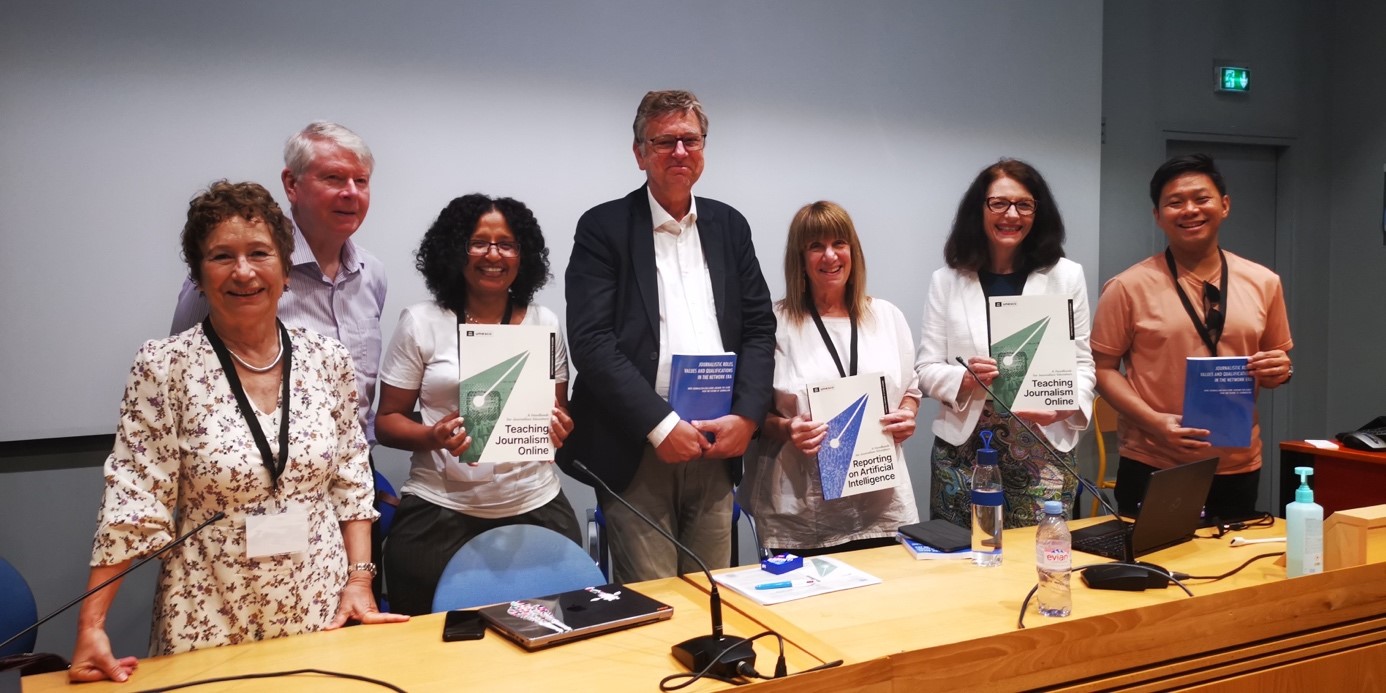
Book launches and free hard copies were part of a WJEC panel held at the annual congress of the International Association for Communications and Media Research (IAMCR), held in France in early July. This was in the context of a lively panel discussion titled “Teaching journalism today”, convened at the start of the IAMCR congress…

As the official WJEC website is undergoing a major design update, you will be directed to the 2025 World Journalism and Education Congress website. Please use the following link: https://www.wjec2025.com

Huge congratulations to Margaret Hughes, who has been elected as the new Chair of the World Journalism Education Council! Margaret served as the Chair of AJE (UK) from 2016 to 2023. During her tenure, she successfully established AJE’s reputation within the UK and internationally, solidifying its position as a vital…

In a world where much journalism education goes unrecognised, WJEC vice chair Nico Drok is a well-deserved exception. This stalwart, and host of the third edition of the World Journalism Education Congress, has received the prestigious title of “Officier in de Orde van Oranje Nassau”, for his more than 40-year…